Sakarit is a Graphic Designer & Visual Artist, based in Brooklyn, NYC
A multi‑genre video montage portfolio featuring surreal edits, found‑footage experiments, psychedelic loops, and emotional visual narratives.
“Women in Trouble: Why Can’t You Free Some Time For Me” is a video montage mashed up from multiple found clips that explore the idea of women caught between daydreams and nightmares. The piece uses surreal, shifting imagery through different emotional states — vulnerability, ecstasy, desire, happiness, turmoil — capturing the many pressures and complexities women carry. The soundtrack, Armand Van Helden’s “Why Can’t You Free Some Time For Me,” deepens the mood and adds a sense of sophistication and elusiveness, echoing the themes of longing, frustration, and escape.
This video reconceptualizes Gustav Klimt’s The Friends (Girlfriends II) by placing the figures within an ethereal looping environment. The sound design echoes the shifting pathways of the woman’s mind, capturing its emotional labyrinths and dreamlike intensity. The montage invites viewers to question whether the woman exists in a phantasm or a daydream, blurring the line between inner vision and imagined reality.
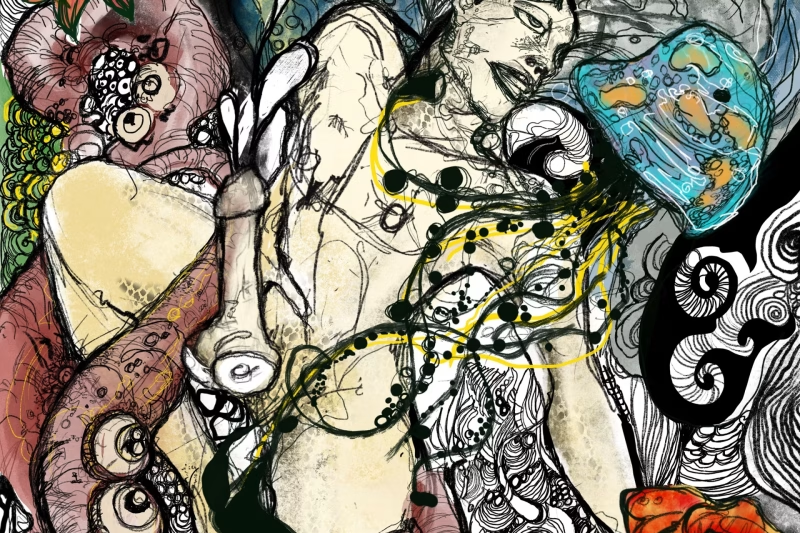
The Macrocosm and the Labyrinth Mind of Judith and Salome” is a video‑montage artwork that reimagines Gustav Klimt’s Judith II through looping, psychedelic animation. By animating fragments of the original painting, the piece transforms Klimt’s iconic figure into a shifting, hypnotic presence — a mindscape where myth, desire, and power collide. The video moves between macrocosmic expansiveness and the intimate, the intricate inner world of the feminine mind, creating a visual meditation on duality, seduction, and the complexity of inner worlds. Through motion, repetition, and complexity, the work invites viewers to enter a dreamlike psychological space where Judith and Salome become symbols of both chaos and control.
This video montage rejuvenates and reconceptualizes Gustav Klimt’s iconic painting The Kiss. The work integrates the aria of “Mad Scene” from Donizetti’s Lucia di Lammermoor—the moment when Lucia’s mind finally breaks under manipulation, heartbreak, and violence. Rather than a simple dramatic climax, this moment becomes the psychological core of the piece, revealing the collapse of inner worlds.
The background is an animated kaleidoscope made from Klimt’s Judith and Holofernes. In Klimt’s interpretation, Judith’s expression has often been read as conflicted—some critics suggest she appears almost tender toward the man she was forced to kill. This tension between desire, power, and destruction becomes a central visual and emotional element in the montage.
The soundscape is built from haunting, tormented screams and ambient noise, echoing the emotional rupture of the imagery. The sound also features Björk’s “It’s in Our Hands” played in reverse, transforming the song into a haunting, fractured atmosphere that feels both intimate and broken.
The appearance of black sperm‑like forms adds another layer of ambiguity, prompting viewers to question whether the kiss becomes painful when heard with sound, or magical and ethereal when experienced in silence. These forms suggest themes of evil, post‑creation, and reproduction, but their meaning is intentionally open. Each viewer is invited to interpret them through their own experiences and associations.
This aanimation reimagines Frida Kahlo’s The Two Fridas (Las dos Fridas) through animation, symbolism, and sound. The original painting reflects Kahlo’s dual identity, cultural conflict, and the emotional rupture of her divorce from Diego Rivera. In this reinterpretation, both Fridas are brought to life with animated eyeballs in their hearts and eyes, creating a whimsical yet uncanny presence.
This work reimagines Frida Kahlo’s The Two Fridas (Las dos Fridas) through animation, symbolism, and sound. The original painting reflects Kahlo’s dual identity, cultural conflict, and the emotional rupture of her divorce from Diego Rivera. In this reinterpretation, both Fridas are animated with confusing eyeballs in their hearts and eyes, giving the figures a whimsical yet uncanny presence.
The background is composed of thousands of dead colorful butterflies, forming a dense and unsettling field behind the figures. From a central point, orchids spiral outward in a whirlpool‑like motion, while four blue butterflies continue to circle the frame in an endless loop—suggesting fragility, persistence, and the possibility of rebirth even within decay.
The soundscape blends birds, tropical breezes, storms, sudden screams, and Sumi Jo’s performance of “The Bell Song” (“Où va la jeune Indoue”) from Act II of Léo Delibes’ Lakmé. The aria becomes a moment of awakening, danger, and forbidden desire, echoing the emotional turbulence shared by both Lakmé and Fridas.
If the Fridas could scream, this is the soundscape I imagine they would create.

This brief mockup of a video expresses viewpoints on the Lincoln Center's past and present. As part of the Branding& Messaging in Communication Design course, the introductory video aims to grab viewers 'attention quickly and clearly explain the center's history and identity.
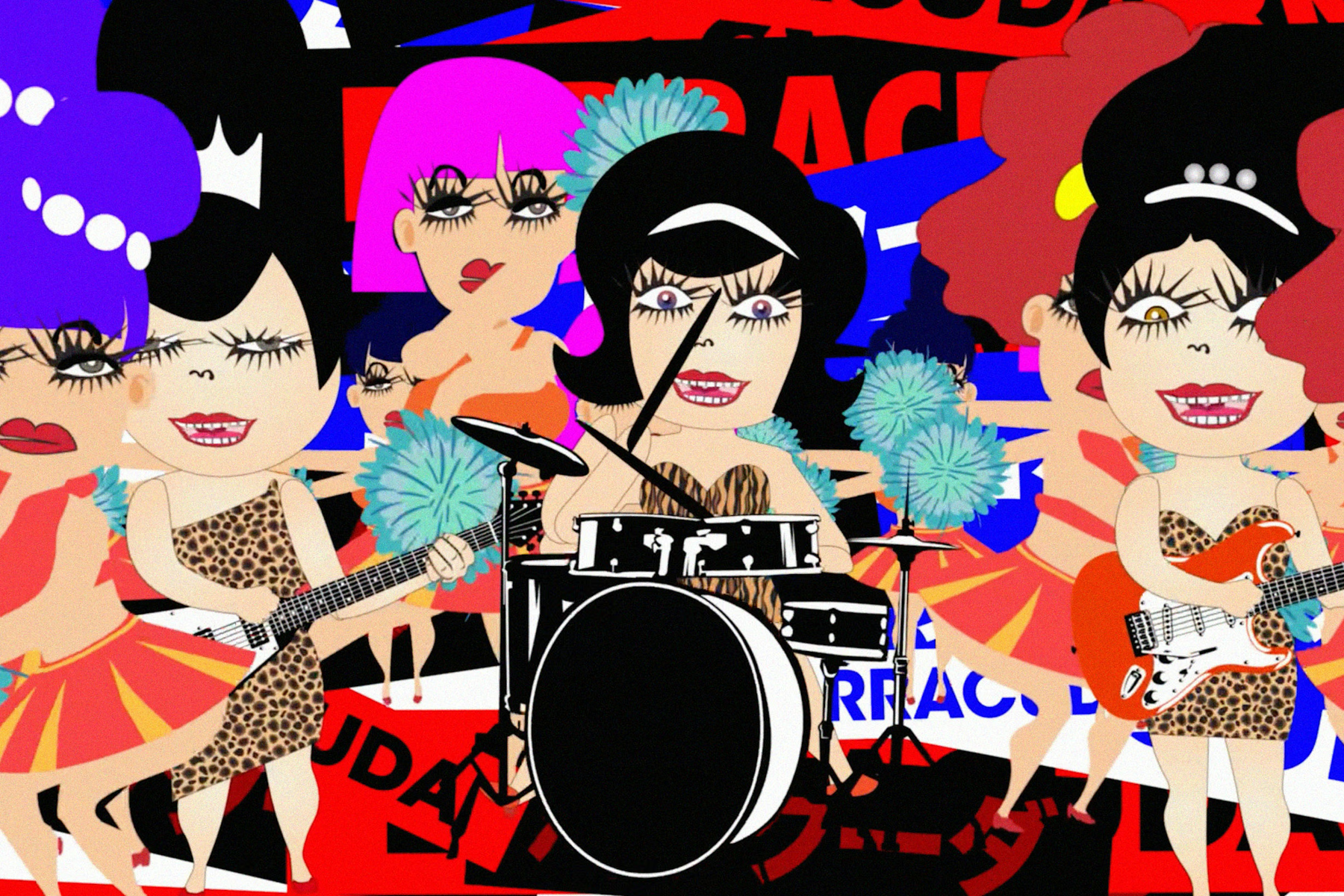
This video montage is a big mashup composed of hundreds of found clips drawn from iconic films, pop stars, musicians, music videos, and more. Edited with the soulful house track “Work It Out” by DSKO, the piece reimagines familiar cultural moments and pushes them into a new visual and the fresh vibe it creates. The music transforms the collected footage into something heightened, rhythmic, and unexpectedly cohesive, giving each fragment a renewed sense of energy and meaning.