




Kindergarten sculptures...
It’s all the things
I couldn’t make as a kid.
Some kind of catching up.”
— David Wojnarowicz

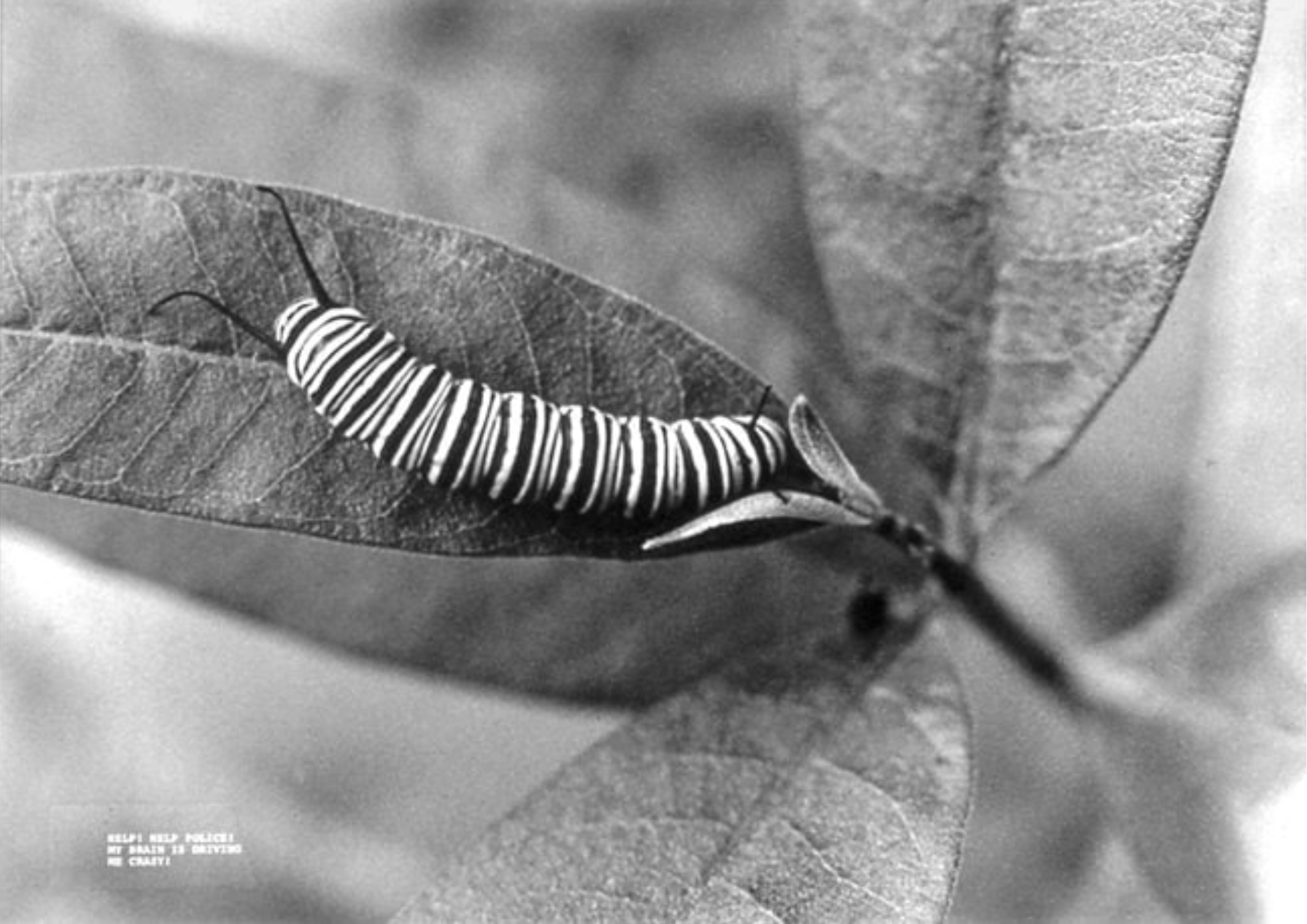
Sakarit is a Graphic Designer & Visual Artist, based in Brooklyn, NYC
Sakarit served as the Spring 2025 David Wojnarowicz Foundation fellow while completing his BFA in Communications Design (Emphasis in Graphic Design) at Pratt Institute.
His fellowship work focused on using graphic design, digital media, online archives, and other design disciplines relevant to David’s creations. His aim is to assist the Foundation in making David Wojnarowicz’s work more accessible to self-taught and marginalized individuals who have come to the arts along non-traditional paths.
Objective:
The David Wojnarowicz Foundation and its members have been exploring ways to expand and conceptualize how Wojnarowicz’s artwork could be translated into industrial design. This poses a unique challenge. On one hand, Wojnarowicz was an outsider in the art world who resisted commercializing his work, on the other, the Foundation wants to introduce his art to new audiences.
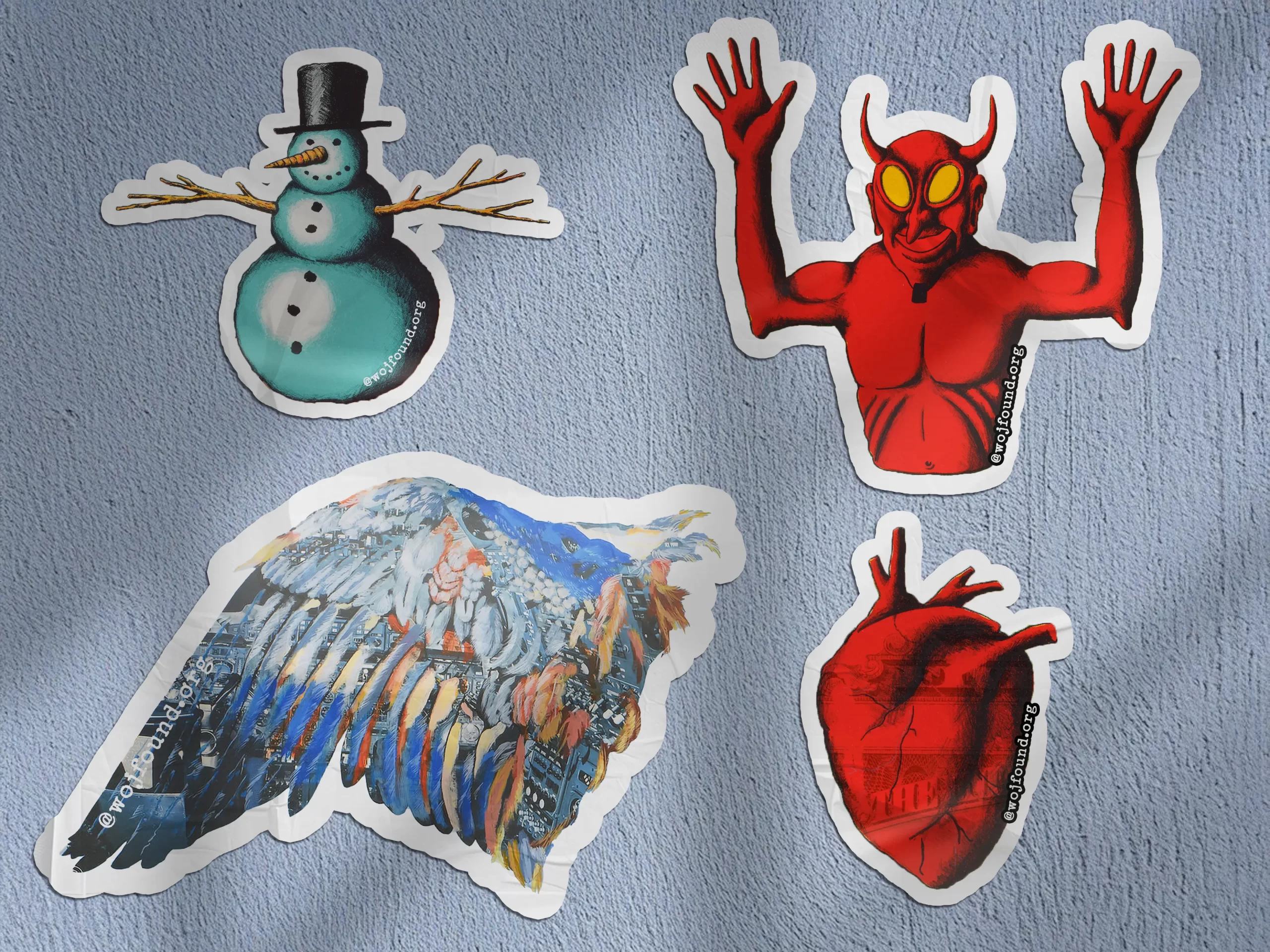
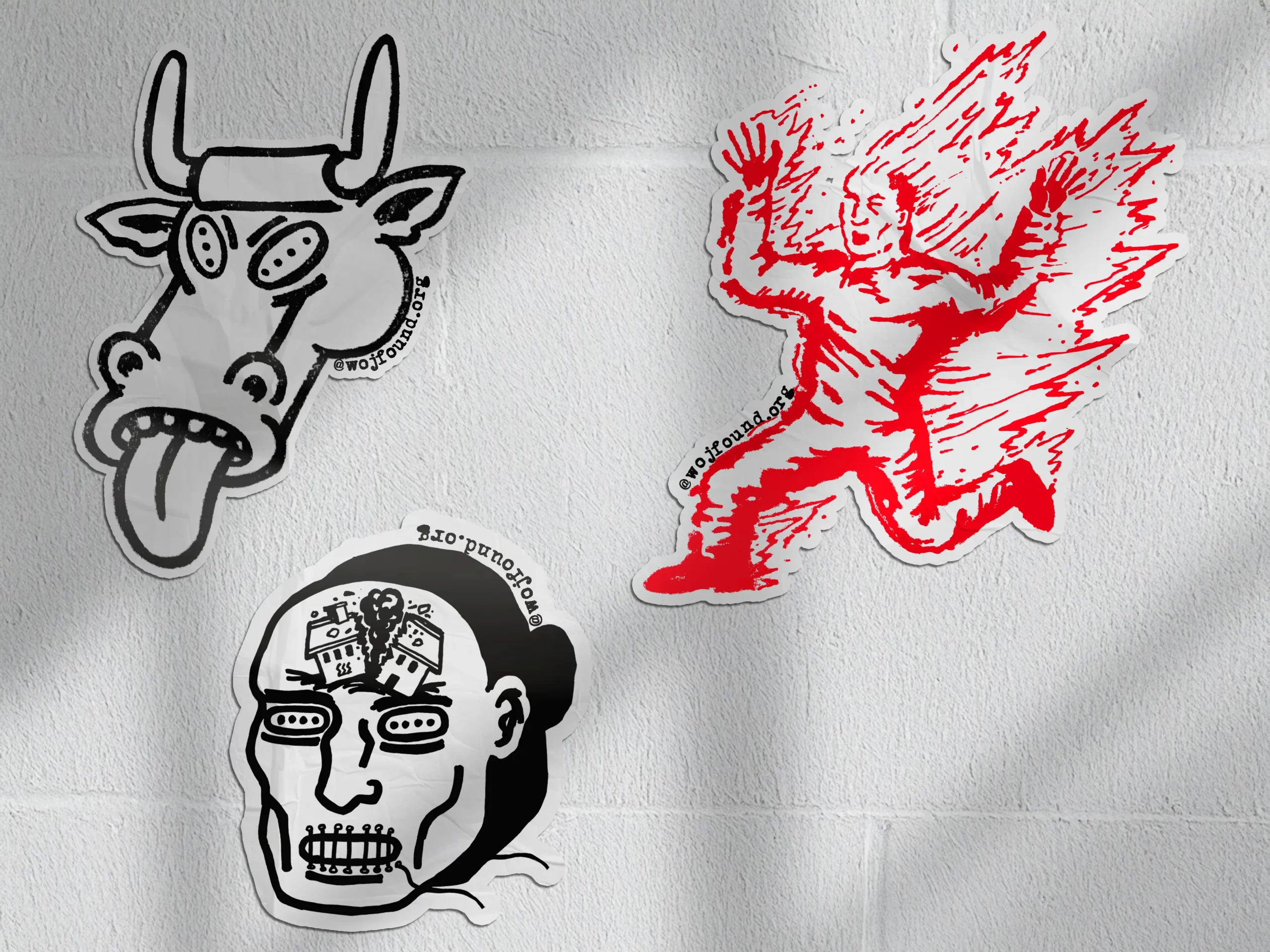
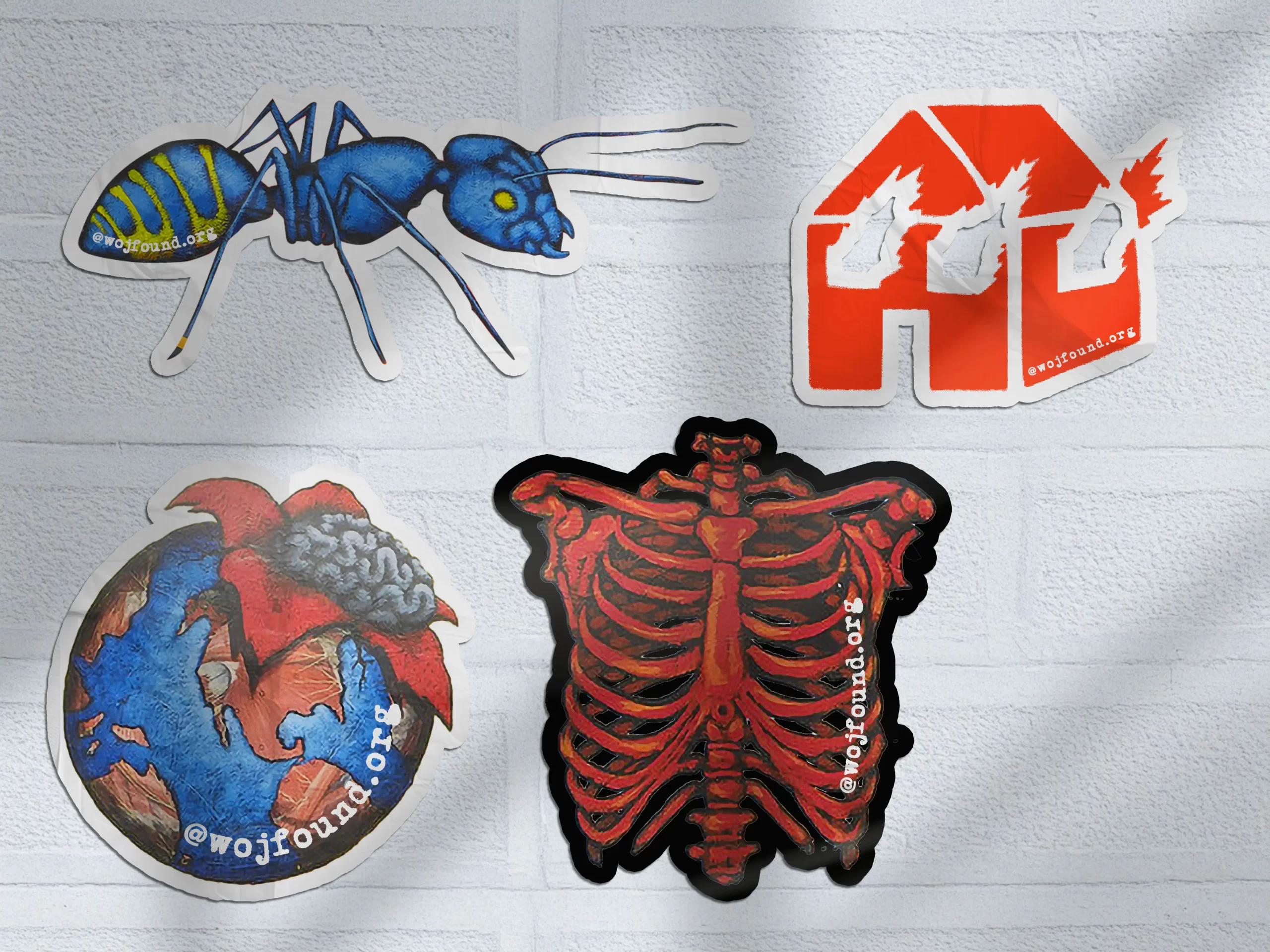
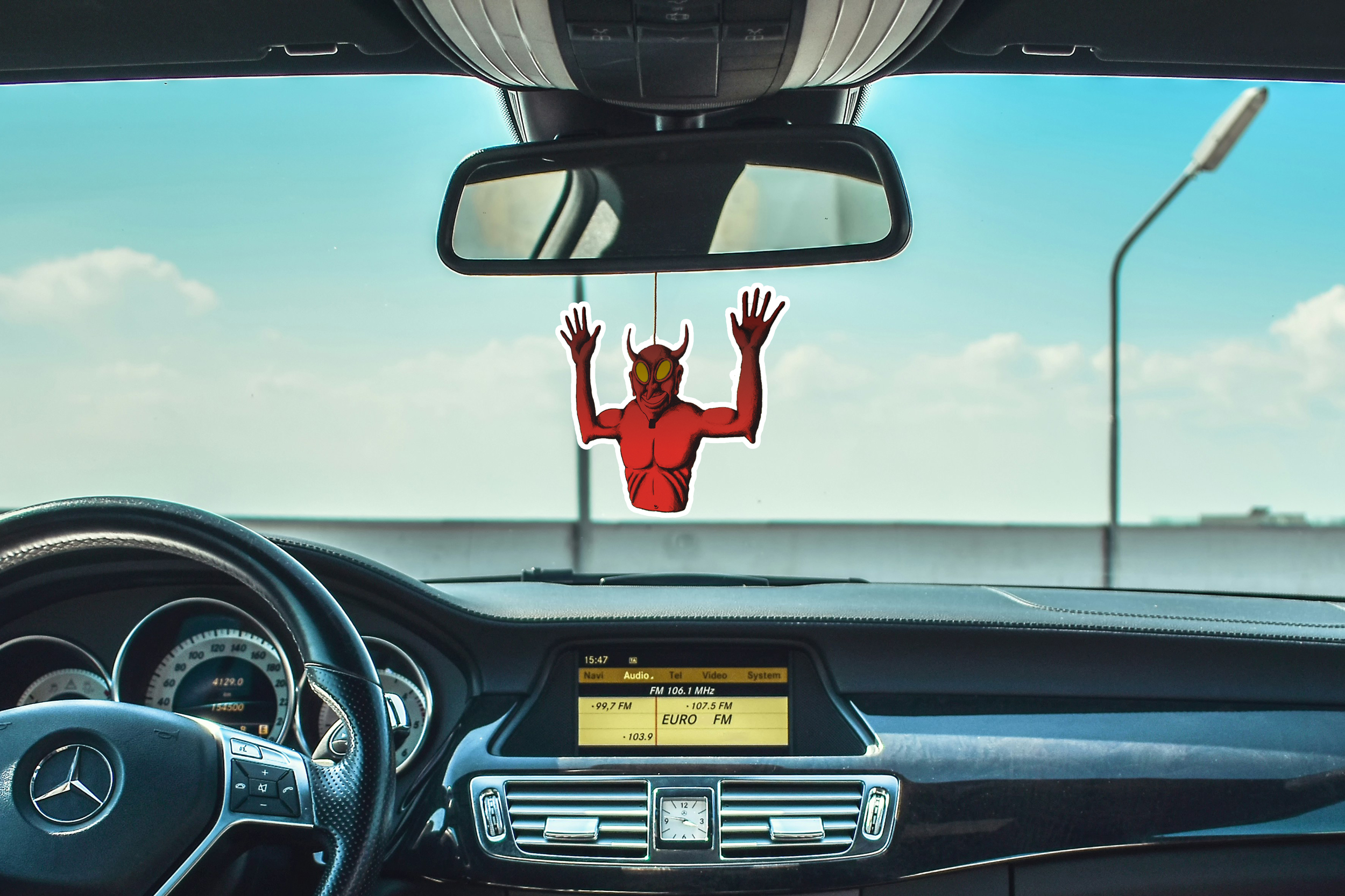
Some of his peers have had their work adapted into personal items like skateboard decks, bottles, t-shirts, tchotchkes, and decorative objects, which can be found in contemporary museums such as MoMa. Through my fellowship, I supported the Foundation in visualizing how Wojnarowicz’s work could take new forms such as fresheners, dashboard toys, stickers, and skateboard decks.
I hope one day, the Board of Trustees will see the potential and make decisions to bring those designs to life.
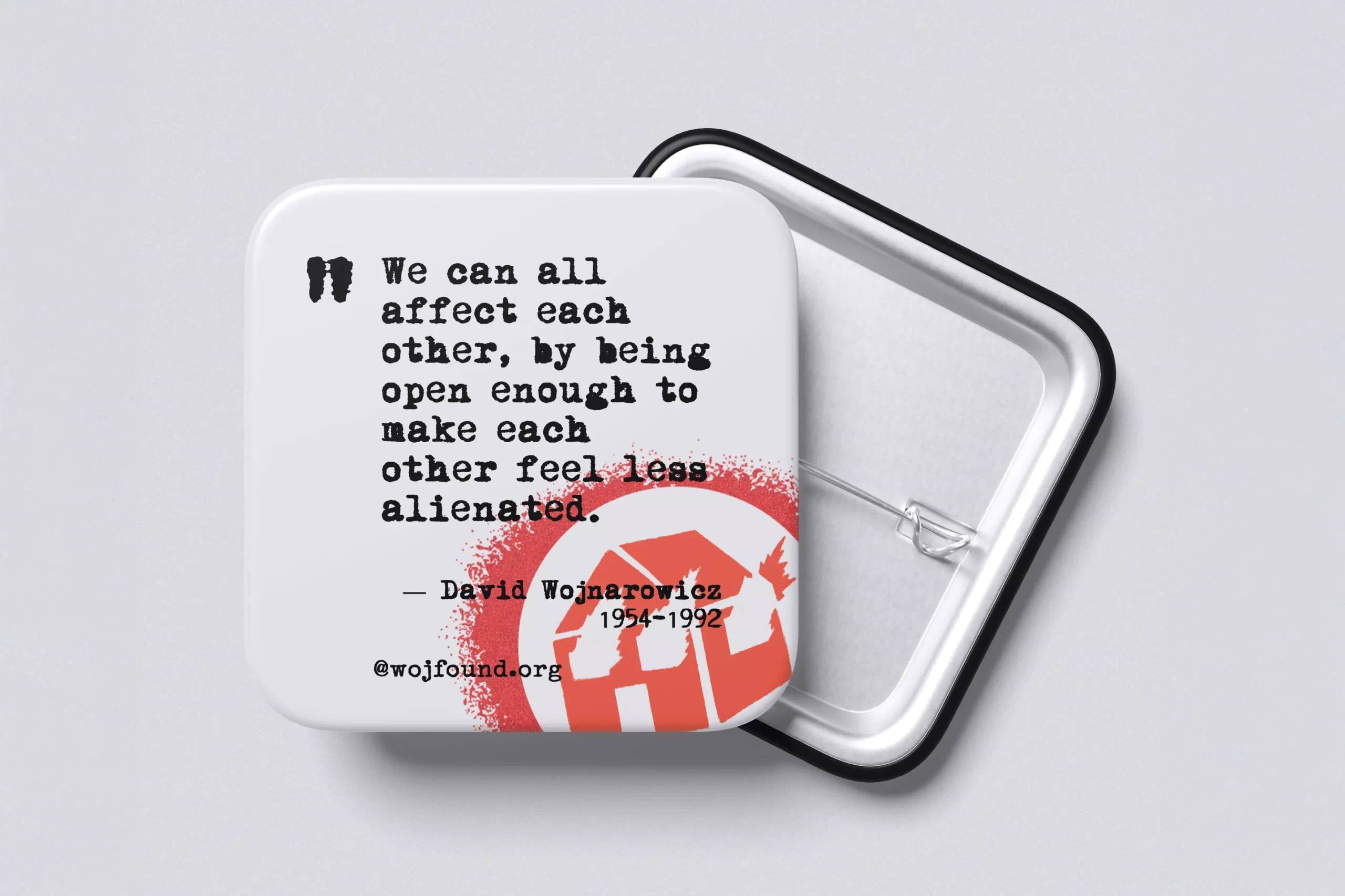
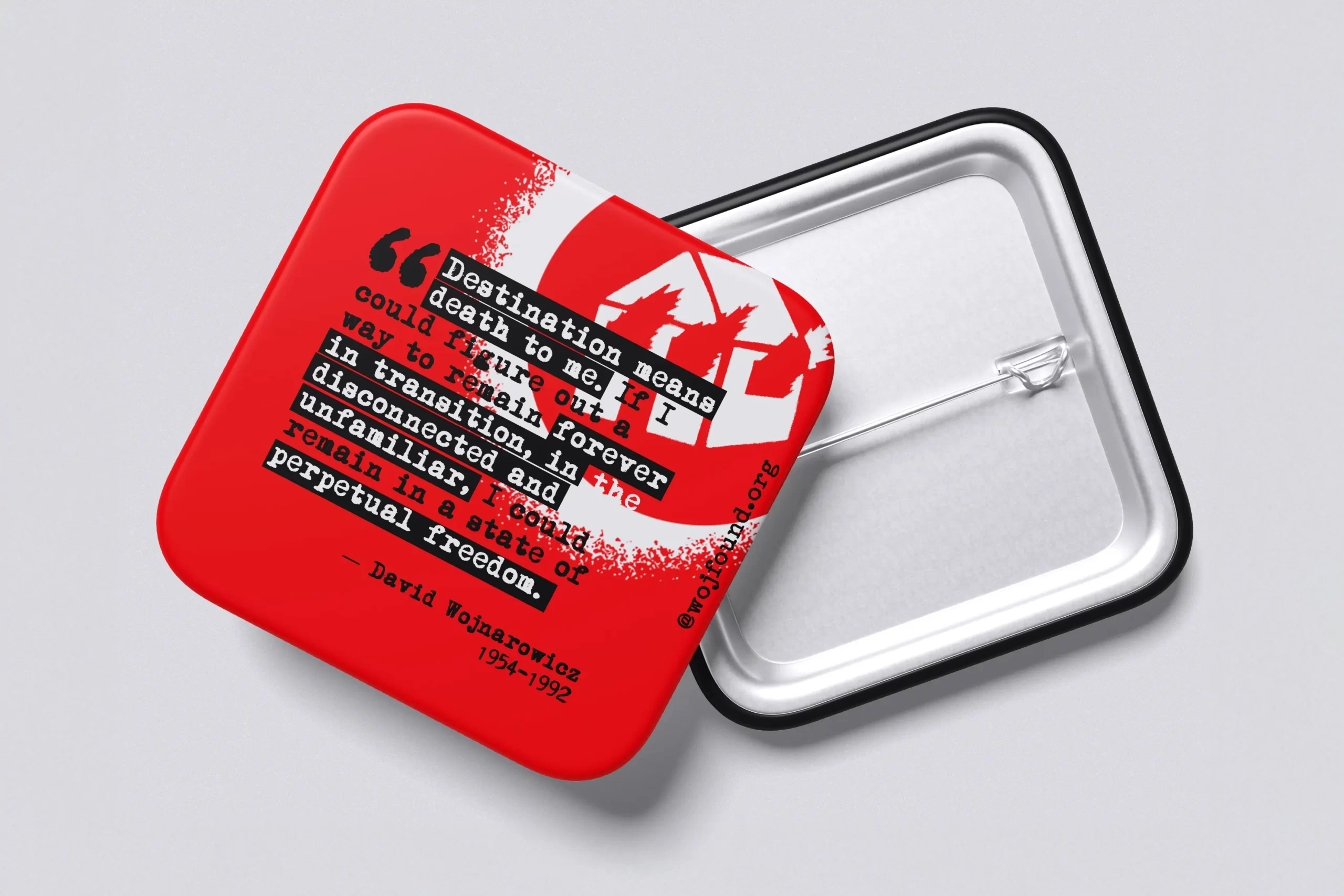
Sticker Art & Botton Pins:
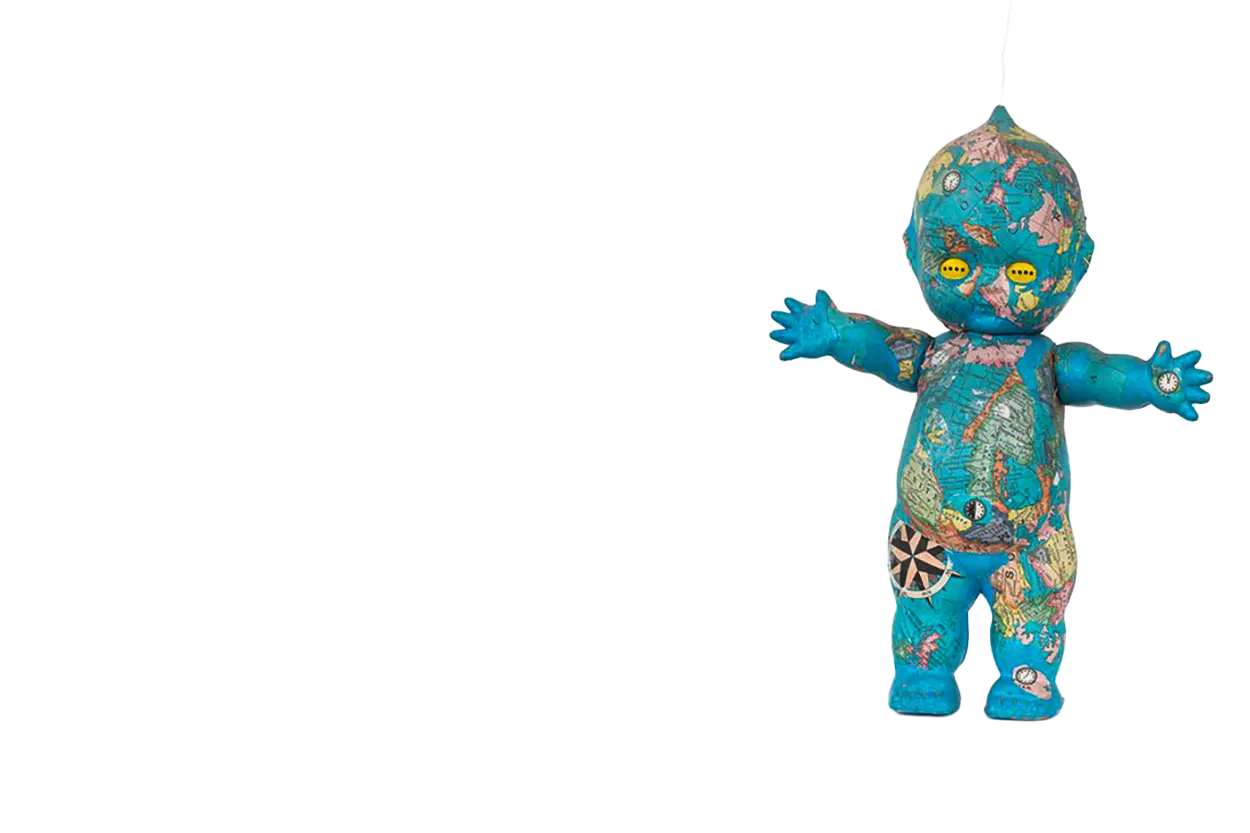
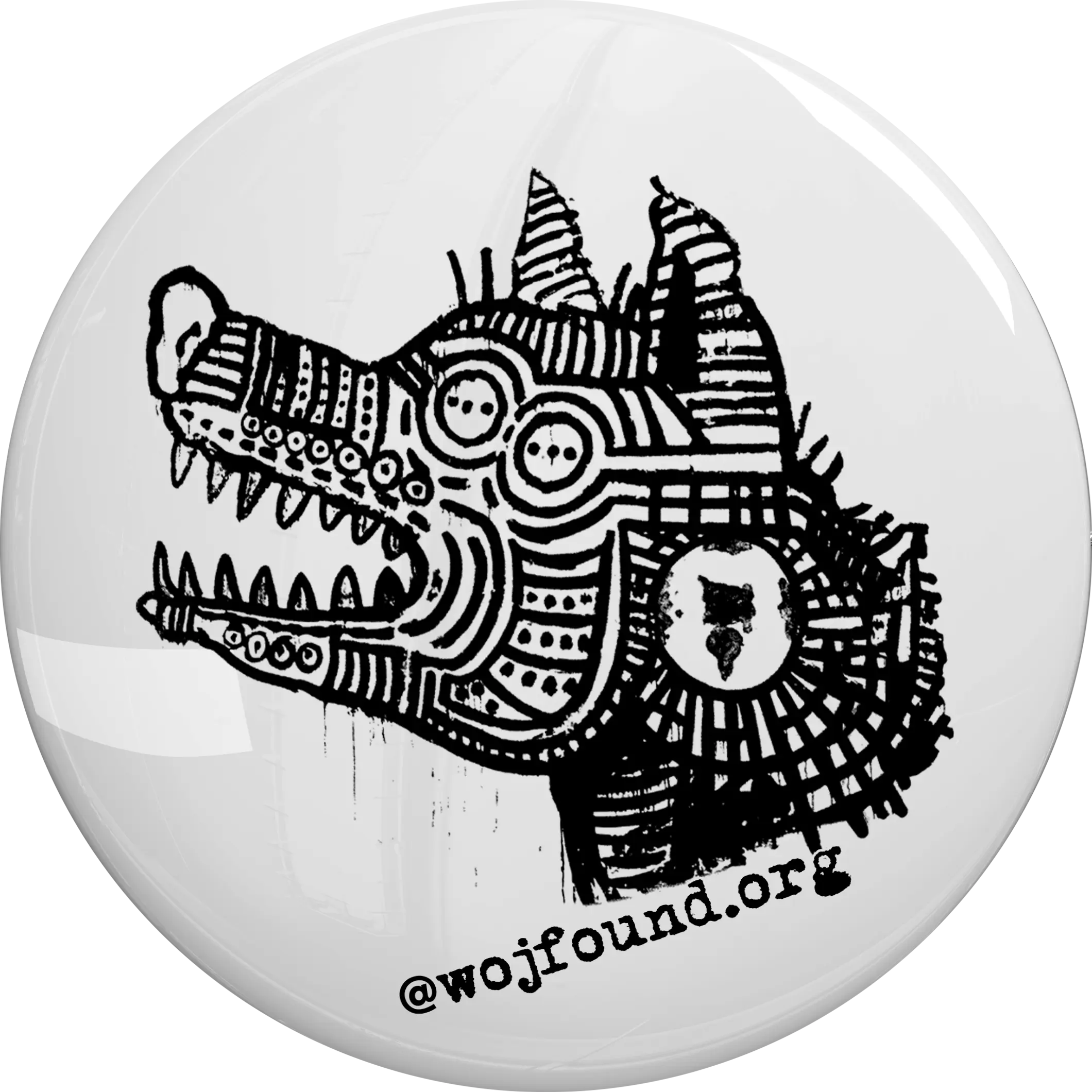
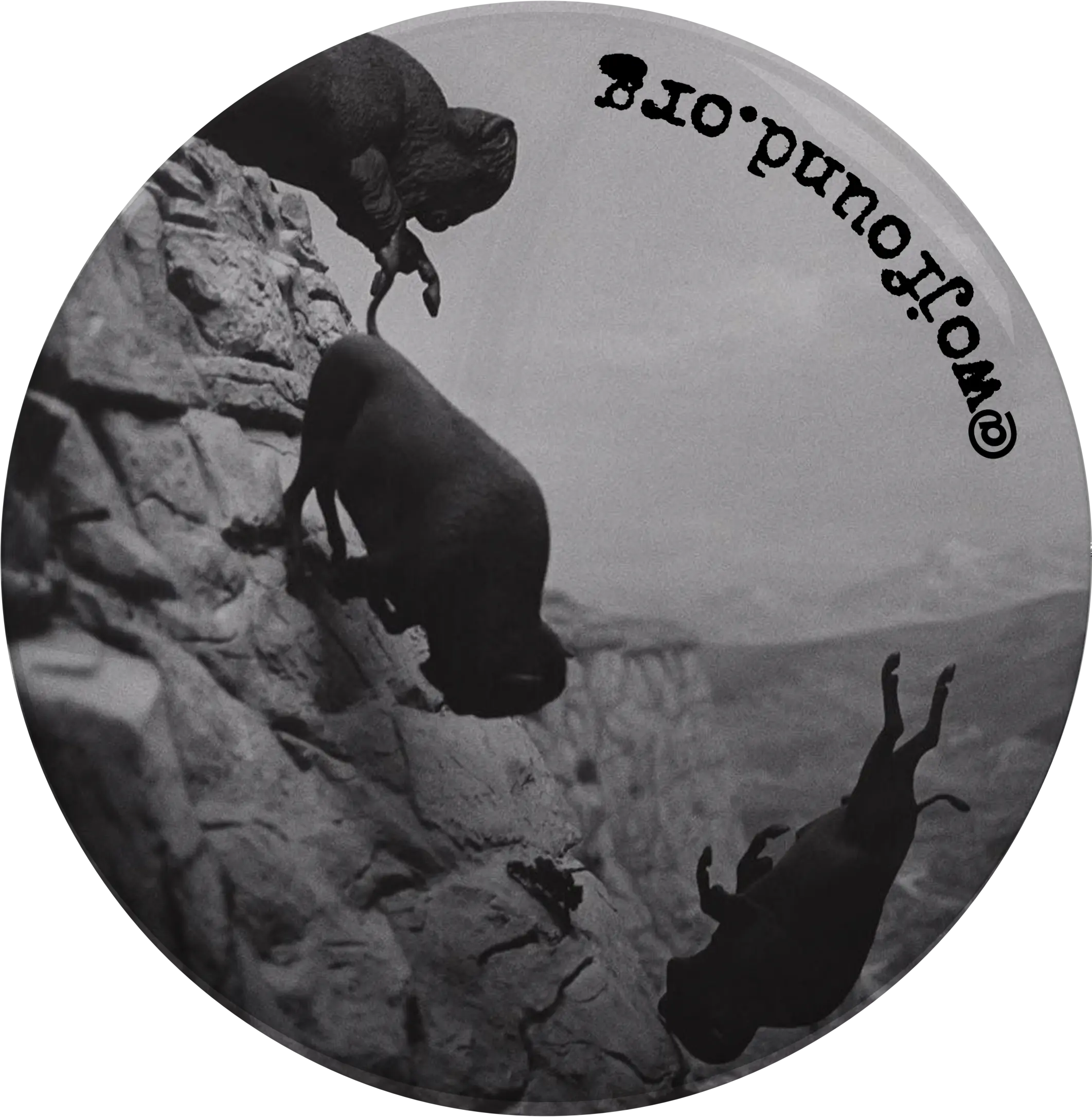
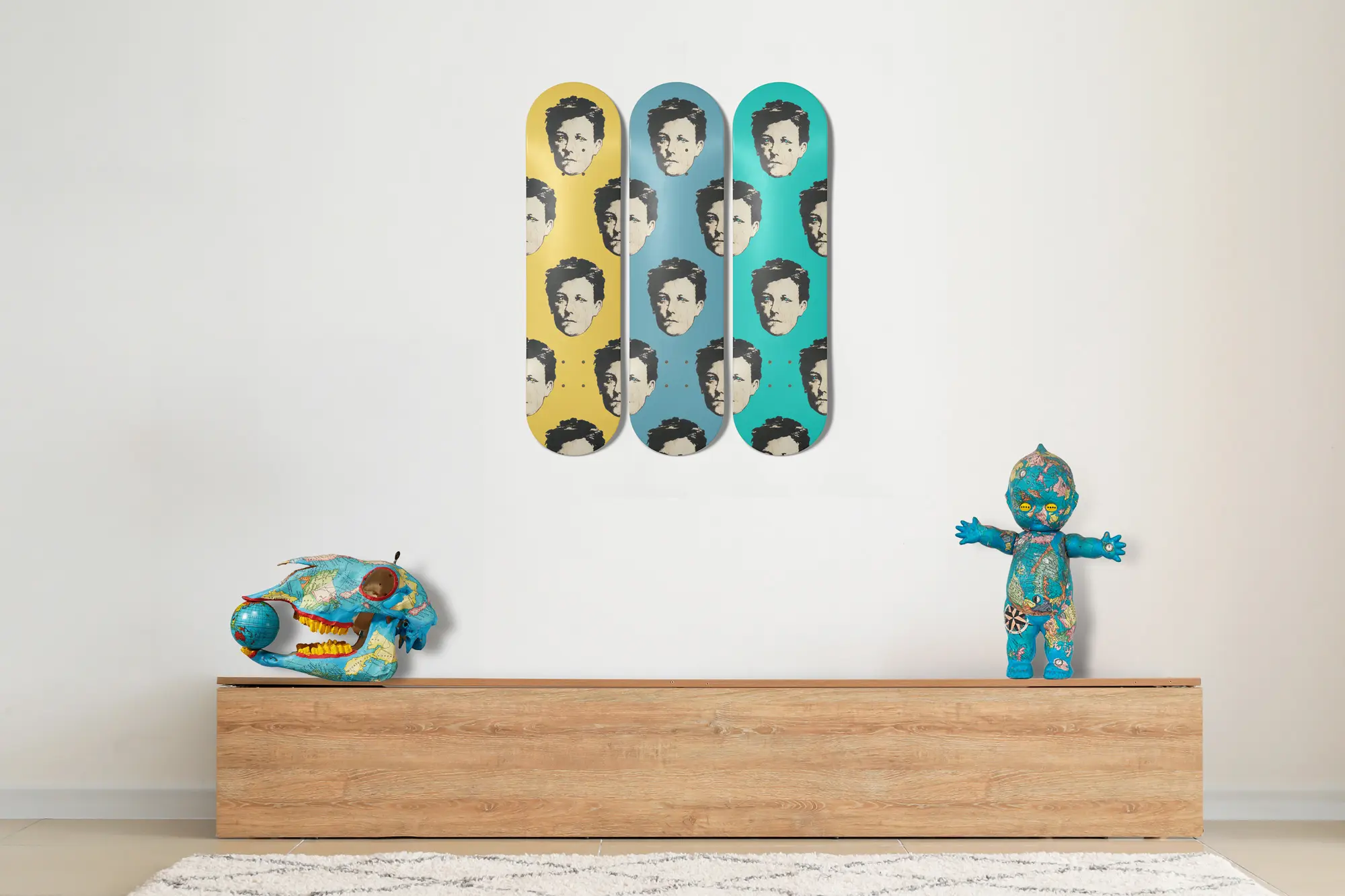
Left: Untitled (Pig Skull), David Wojnarowicz, 1984. Acrylic and map collage on skull with metal globe, 7.5 by 11.5 by 5.5½ in.
Middle: Skateboard Triptych mockup, designed by Sakarit, featuring imagery derived from David Wojnarowicz’s iconic mask of Arthur Rimbaud, the French poet whose influence deeply shaped Wojnarowicz’s life and work.
Right: EVOLUTION, David Wojnarowicz, 1985, Mixed media on plastic doll, 17.5 x 13 x 5 inches
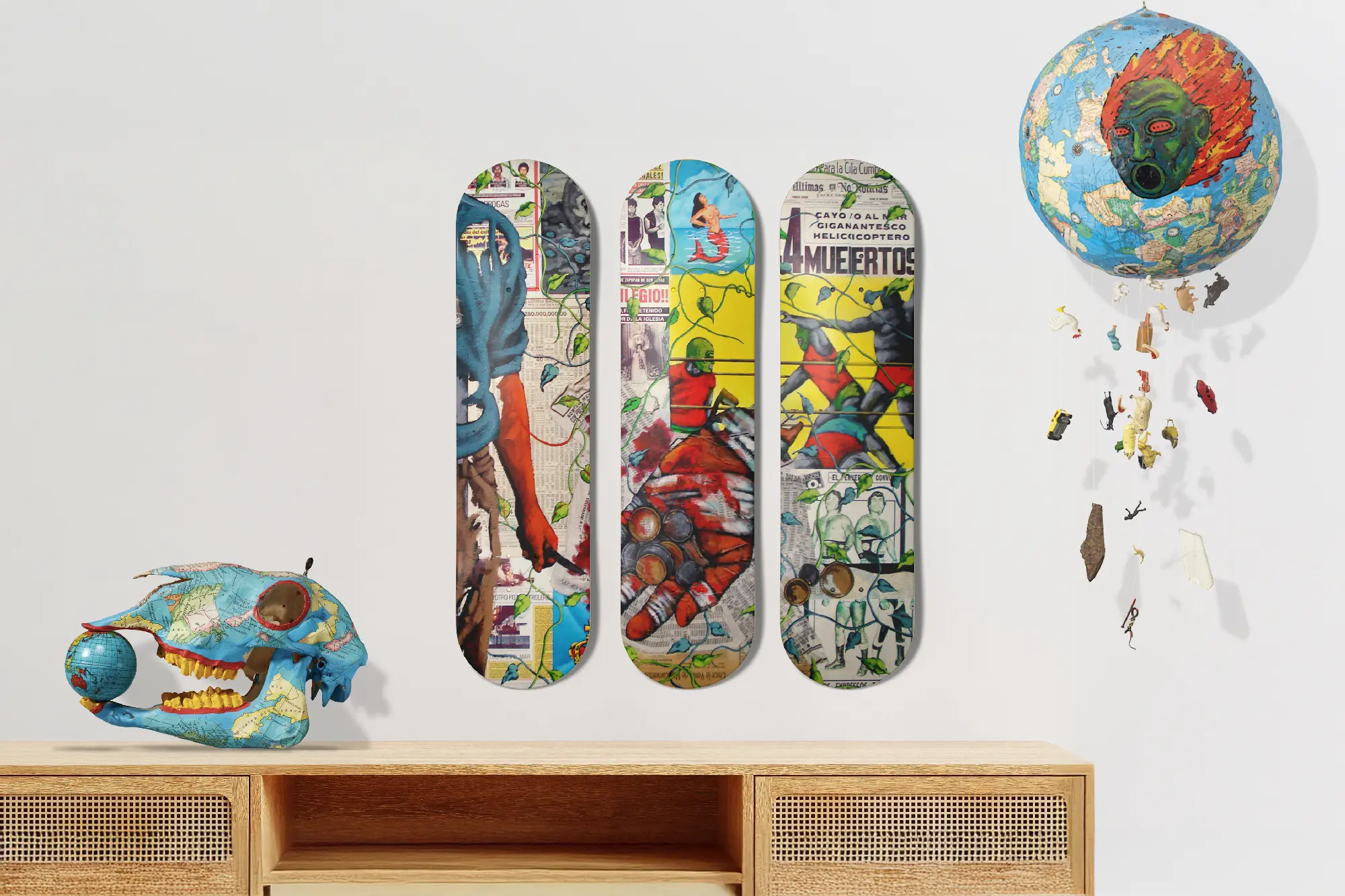
Left: Untitled (Pig Skull), David Wojnarowicz, 1984. Acrylic and map collage on skull with metal globe, 7.5 by 11.5 by 5.5½ in.
Middle: Skateboard Triptych mockup, designed by Sakarit, featuring imagery derived from David Wojnarowicz’s Street Kid (1987), a collage and acrylic work on Masonite measuring 48 x 72 inches.
Right: Science Lesson in 3D, David Wojnarowicz, 1984, Acrylic on printed paper collage and paper maché, Monofilament wire and found objects. Provenance: Originally exhibited at Gracie Mansion Gallery, New York; acquired directly from the gallery by the present owner.
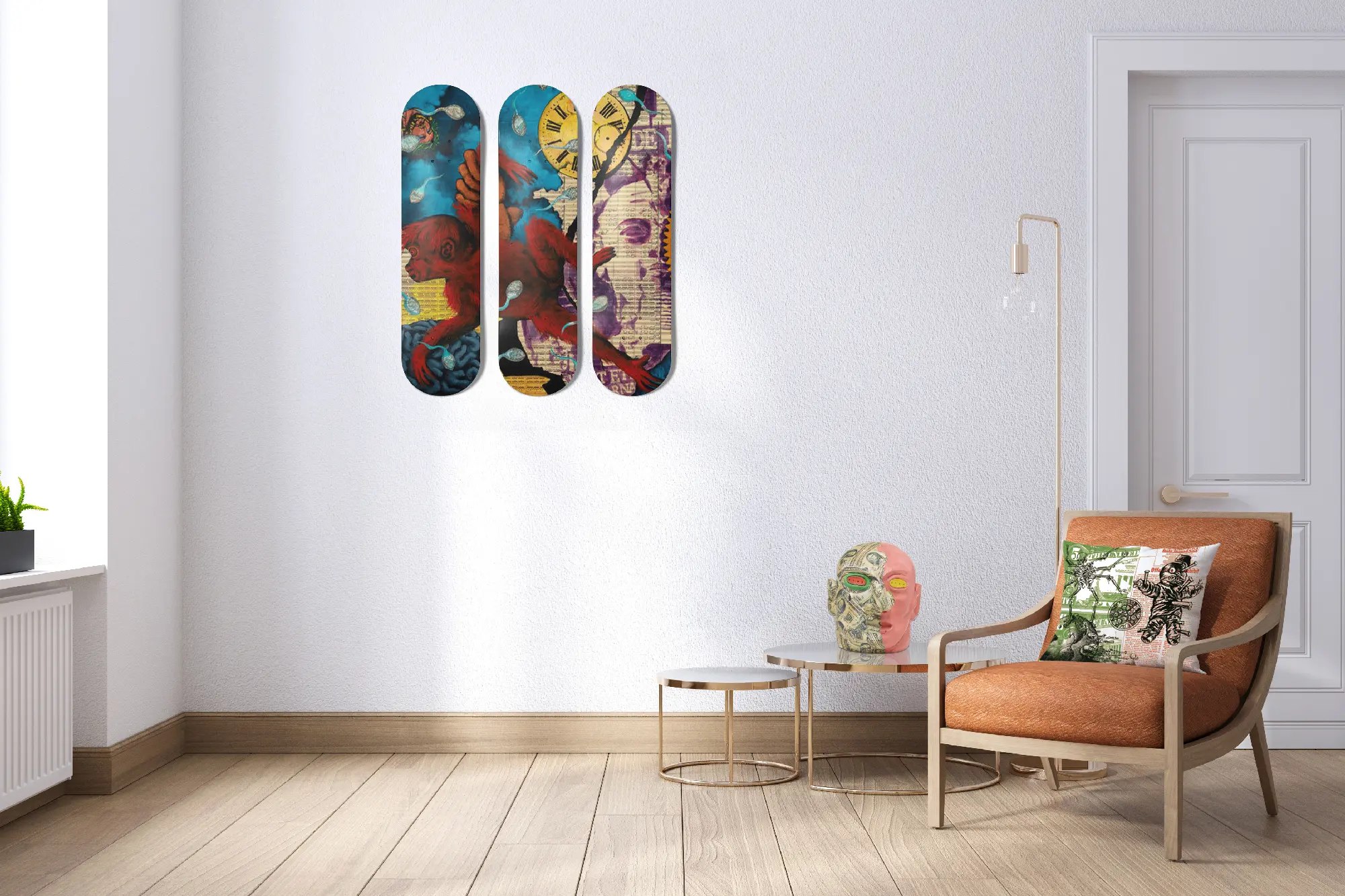
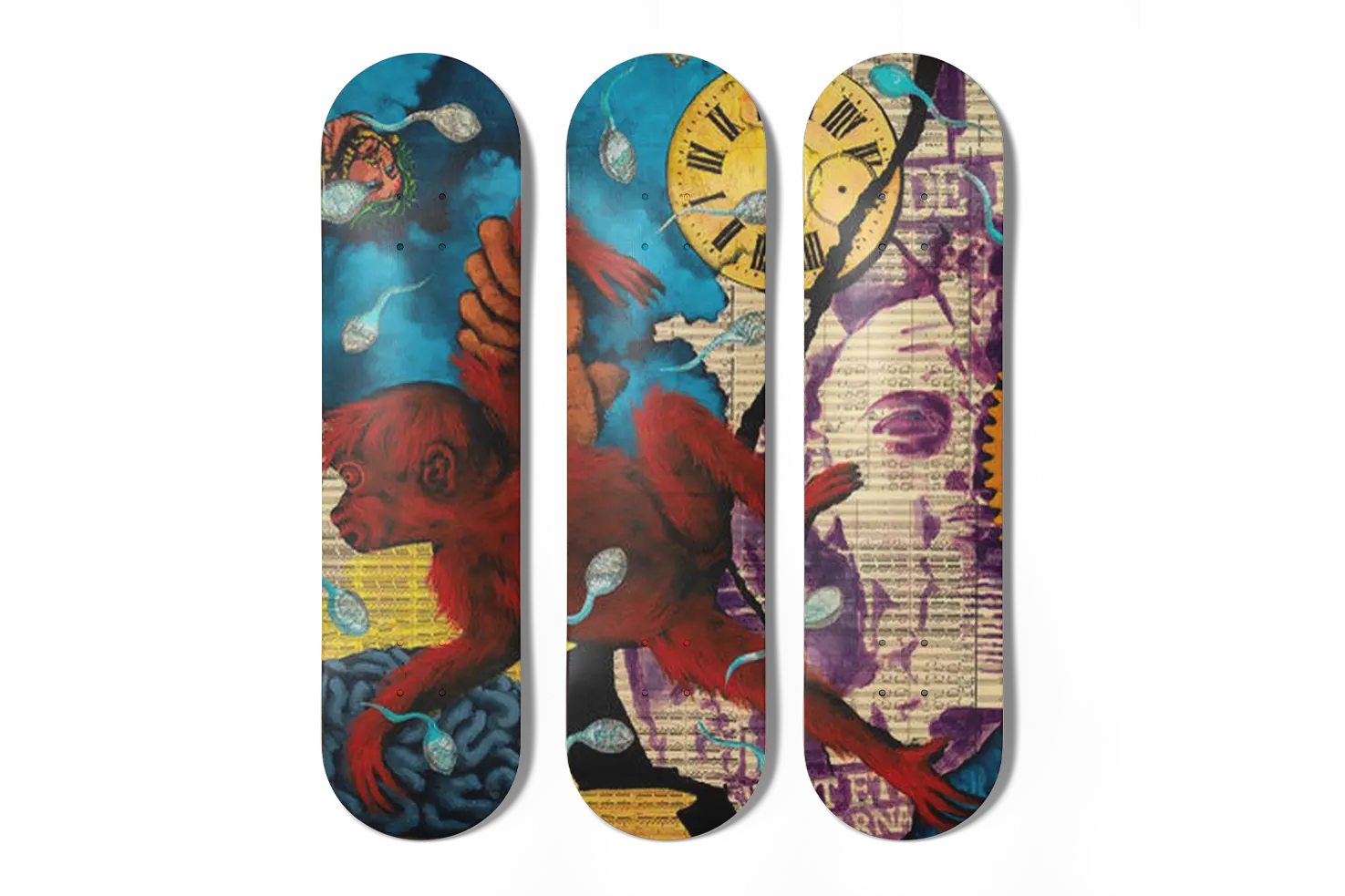
Left: Skateboard triptych mockup, designed by Sakarit, featuring artwork derived from David Wojnarowicz’s Fear of Monkeys/Evolution (1988). Originally created using acrylic and opaque watercolor on cut paper, the artwork is part of the collection at the Whitney Museum of American Art.
Middle: Untitled (from The Metamorphosis series), David Wojnarowicz, 1984. Collaged paper and acrylic on cast plaster, 10 h × 8½ w × 9½ d in (25 × 22 × 24 cm).
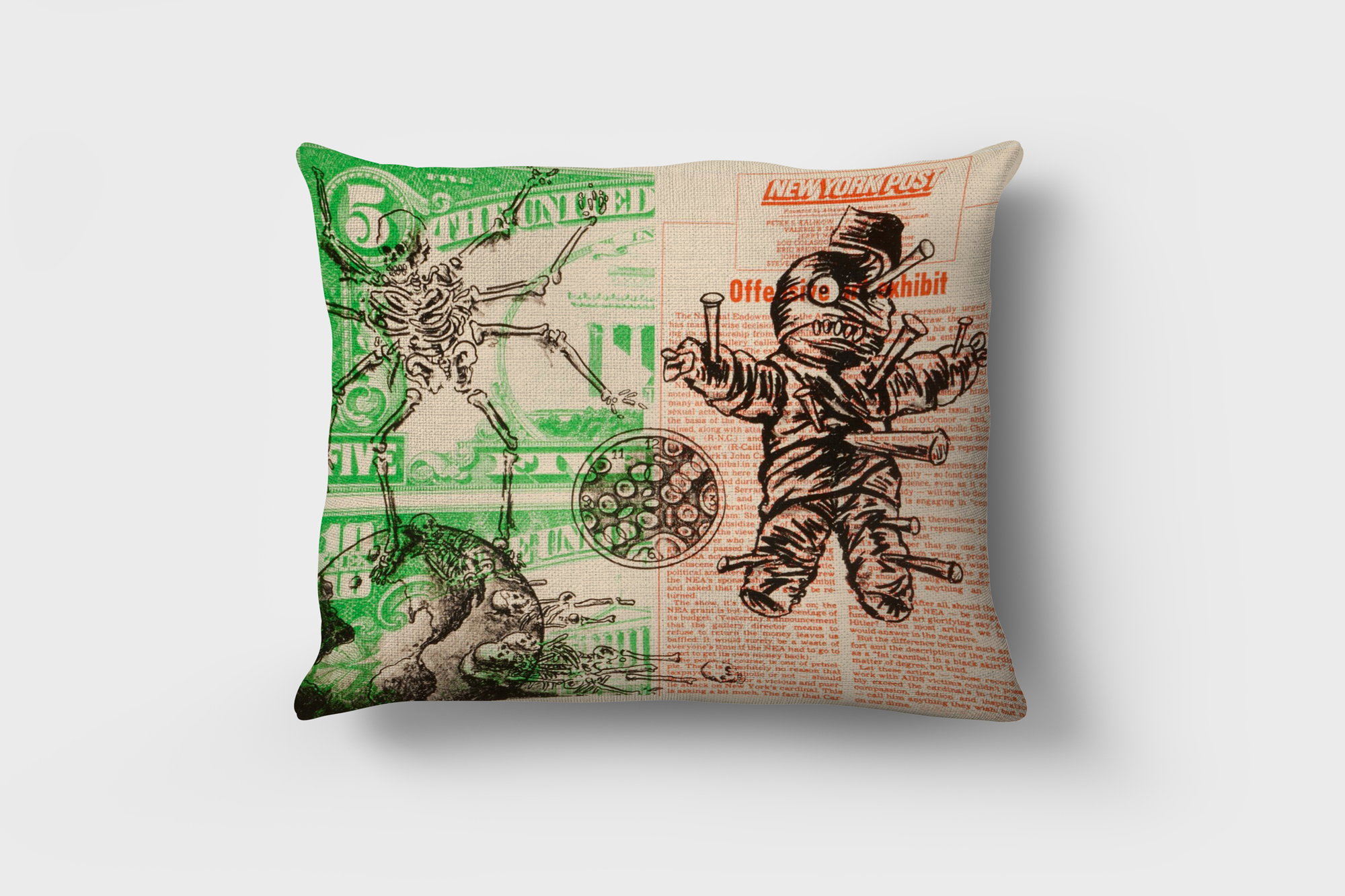
Right: Pillow sheet mockup, created by Sakarit, featuring imagery derived from David Wojnarowicz’s Untitled (Voodoo Doll and Spider), 1990, Lithograph in colors, Dimensions:
8 1/8 × 10 in | 20.6 × 25.4 cm
Researched and Authored by Sakarit CHANKAEW
Source material retrieved from: [https://wojfound.org/exhibition/action-installation-beast-1982-ps1/]
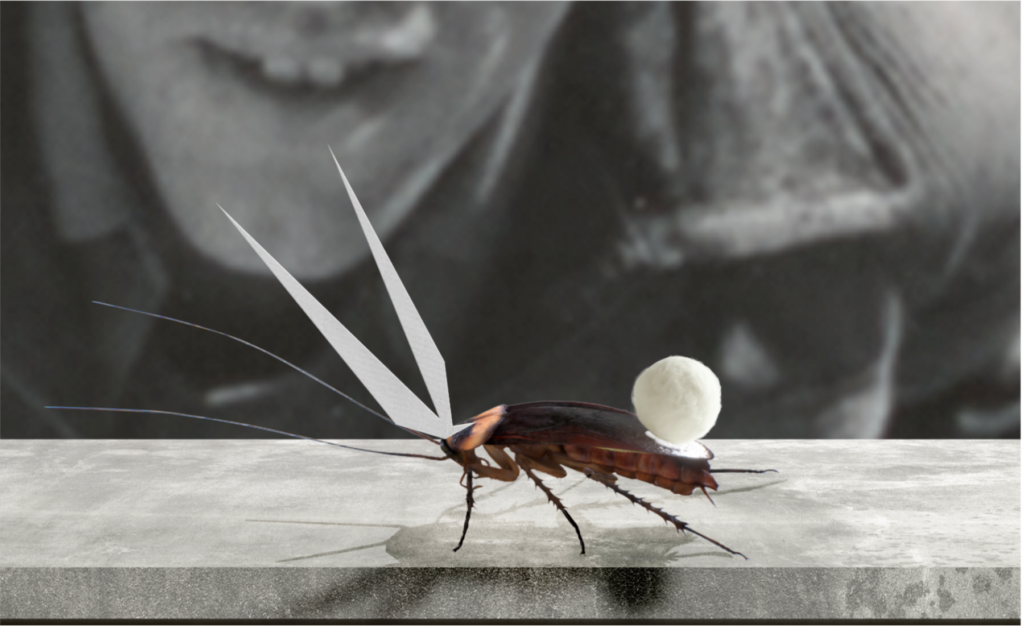
In 1981, David Wojnarowicz befriended twenty-one year-old Sophie Breer, an artist and co-worker at the Peppermint Lounge. David delighted Breer at the “Pep” with antics such as letting a costumed cockroach out of a jar to run across the bar at 3am. Amused, Sophie rented a Betamax camera to create the film Waje’s Cockabunnies. In the style of the mid-century children’s show Romper Room, her 14-minute video features David attaching bunny ears and cottontails to cockroaches he found in his apartment.
Waje’s Cockabunnies captures David’s whimsical creative process, undoubtedly shaped by his personal and political agenda, as he sits at a child’s desk and uses paper, scissors, rubber cement and Q-tips to provide the roaches with their costumes. Surrounded by his friends Sophie, filmmaker Emily Breer (Sophie’s younger sister), and David Baillie (Emily’s boyfriend), David concludes his playful demonstration with the insects’ invitation to a Roach Motel.
David’s biographer, Cynthia Carr, describes the “cock-a-bunnies” as “creepy-cute, a riveting combination” while Breer humorously asks on camera if David is “taking the ‘s’ out of ‘pest.’” Art critic Carlo McCormick remembers David once entering a cock-a-bunny in a contest for the most horrible pet at The Pyramid Club “to celebrate the squalor and poverty of our lives.”
In 1982, P.S.1 Contemporary Art Center displayed the exhibition Beast: Animal Imagery in Recent Painting, guest curated by Richard Flood. Although a curator for the show had visited David’s Houston Street studio, David’s work was not ultimately selected. At that time, P.S.1 was considered a premier venue for showcasing artists from the Lower Manhattan scene, and David was disappointed to be excluded.
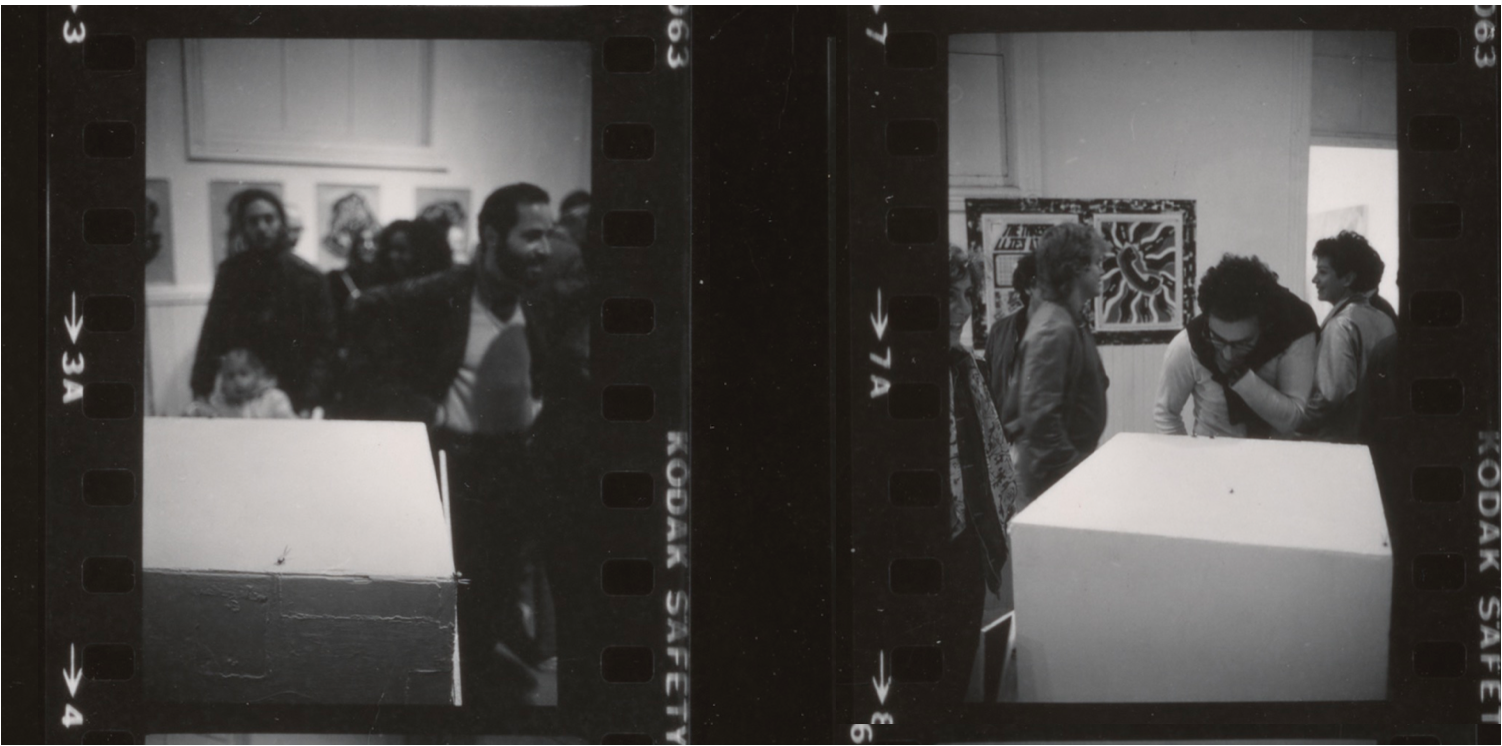
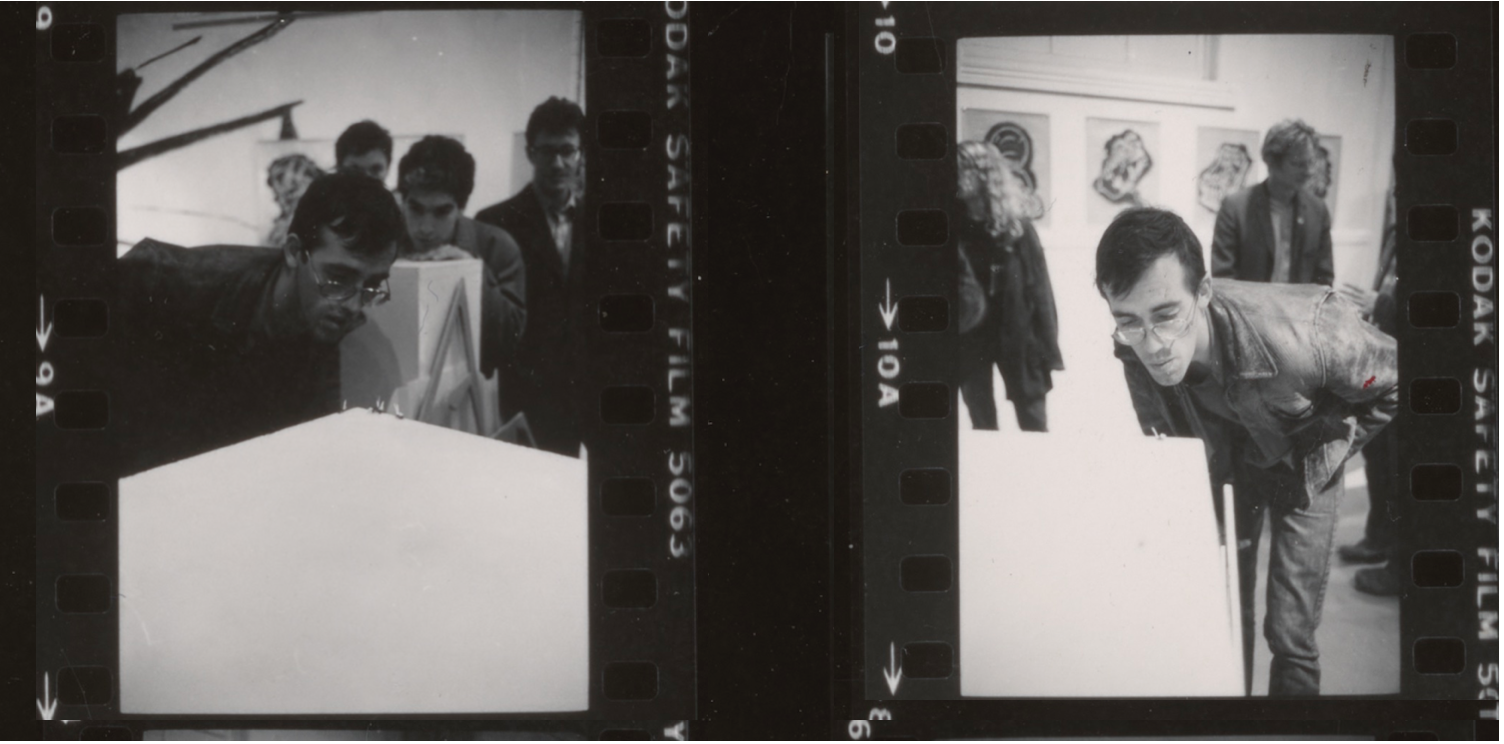
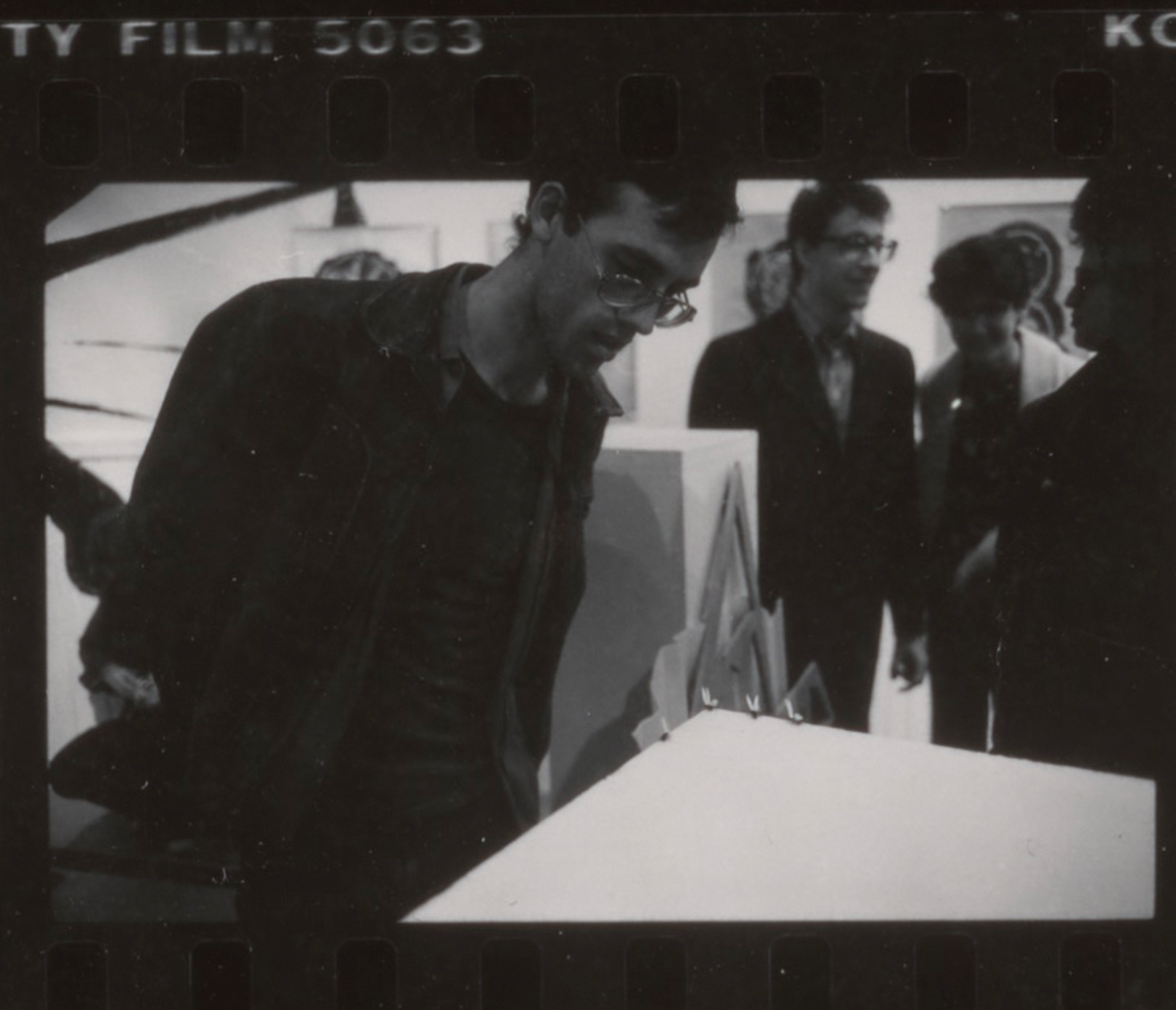
The day that Beast opened, David assembled thirty cock-a-bunnies at filmmaker Tommy Turner’s apartment. Later, he attended the opening party with photographer Peter Hujar, who documented David’s release of the “cock-a-bunnies” from a plastic can. Some were placed near works by artists like Andy Warhol and Francesco Clemente, while others were allowed to move across pedestals and administrative desks. Village Voice critic Richard Goldstein recalled how “every time they scurried off [David] would gently pick them up in his gigantic hands and put them back [on the pedestal].”
David had an adversarial relationship with the art world, even as it opened its doors to him.
From then on, David referred to his intervention as an “action installation,” proudly adding this bold “participation” in the “Beast” exhibition to his CV. Through his intervention, David highlighted his self-identification and perception as an outsider, both within the art community and in the broader societal context.
Cynthia Carr writes that “David had an adversarial relationship with the art world, even as it opened its doors to him.” David’s “cock-a-bunnies” guerrilla intervention at PS1 captured his sense out outrage not only towards the gatekeepers of the art world but also a abusive family environment, unjust society, and later neglectful government healthcare system.
Given [David's] own long-time outlaw status, and especially after awareness of HIV/AIDS, [he] would remain preoccupied with illegitimacy, closely associated with being designated abject or diseased.
In an essay about David’s use of animal figures in his work, art historian Mysoon Rizk writes that he would often “deploy animal protagonists as ‘underdog’ surrogates.” Reflecting on the “cock-a-bunnies” project, she cites the writer Marion Copeland, who argues that cockroaches frequently represent “the weak and downtrodden, the outsiders, those forced to survive on the underside and on the margins of dominant human culture.”
Rizk emphasizes that “given his own long-time outlaw status, and especially after awareness of HIV/AIDS, Wojnarowicz would remain preoccupied with illegitimacy, closely associated with being designated abject or diseased,” and points out that David’s “cock-a-bunnies” preceded his work addressing the AIDS crisis, and reflected a lifelong identification with marginality.
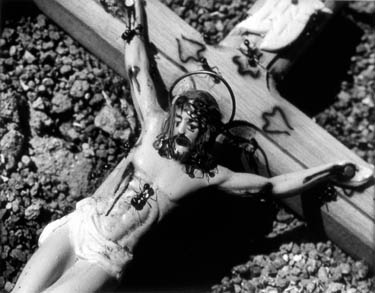
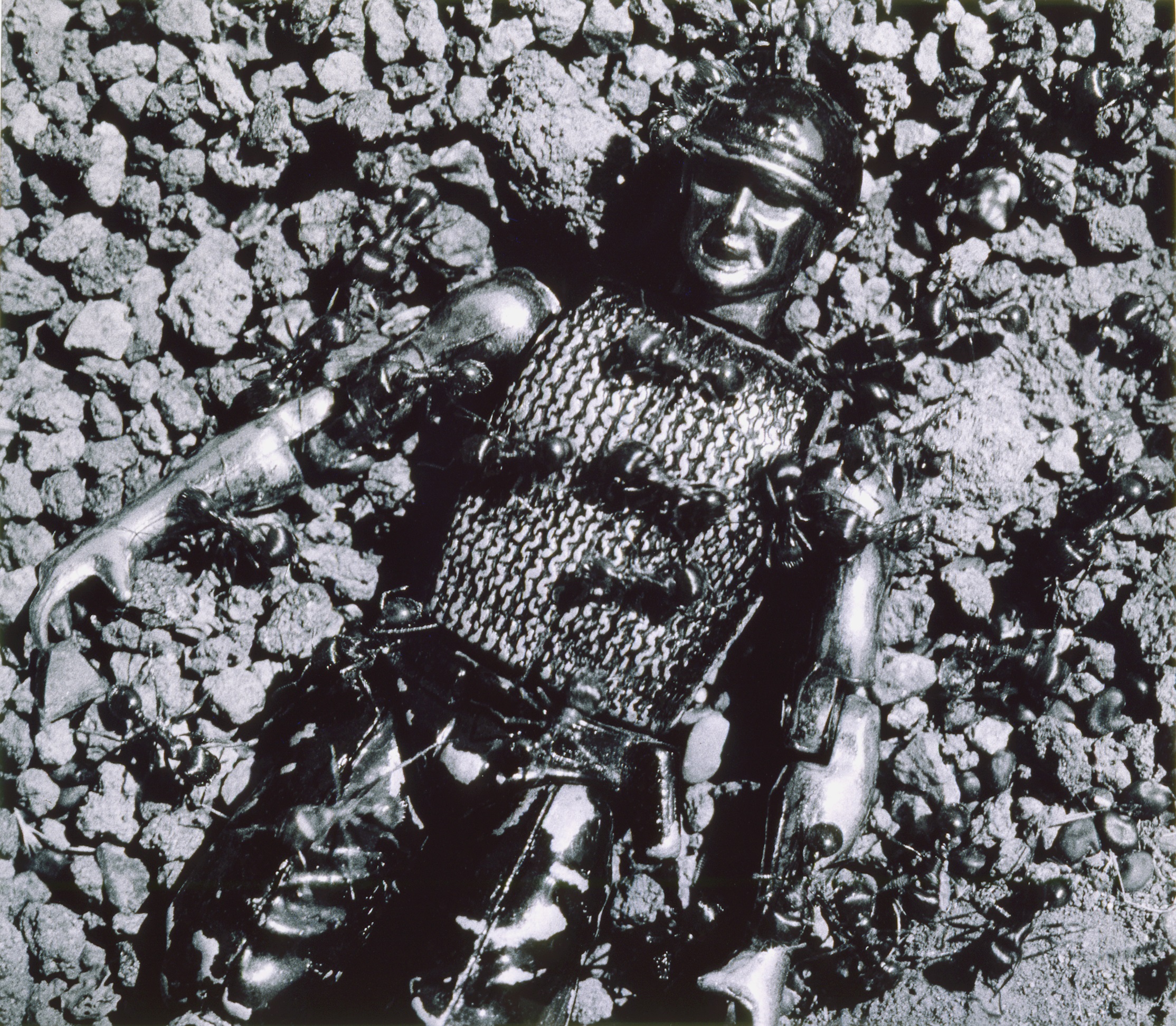
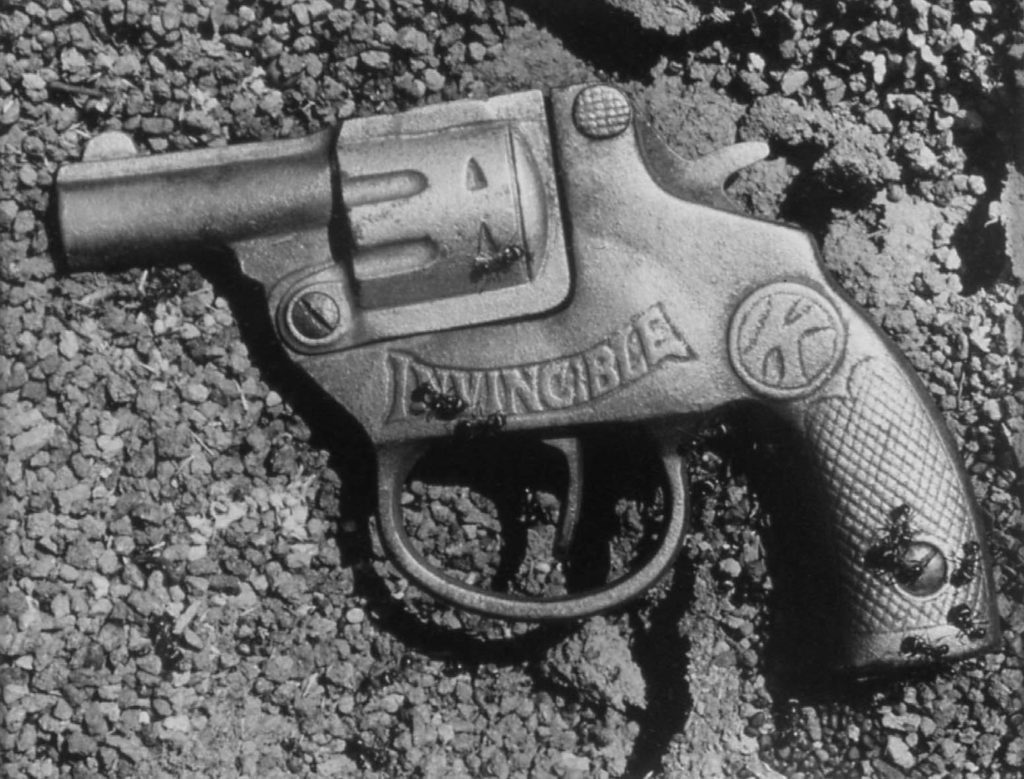
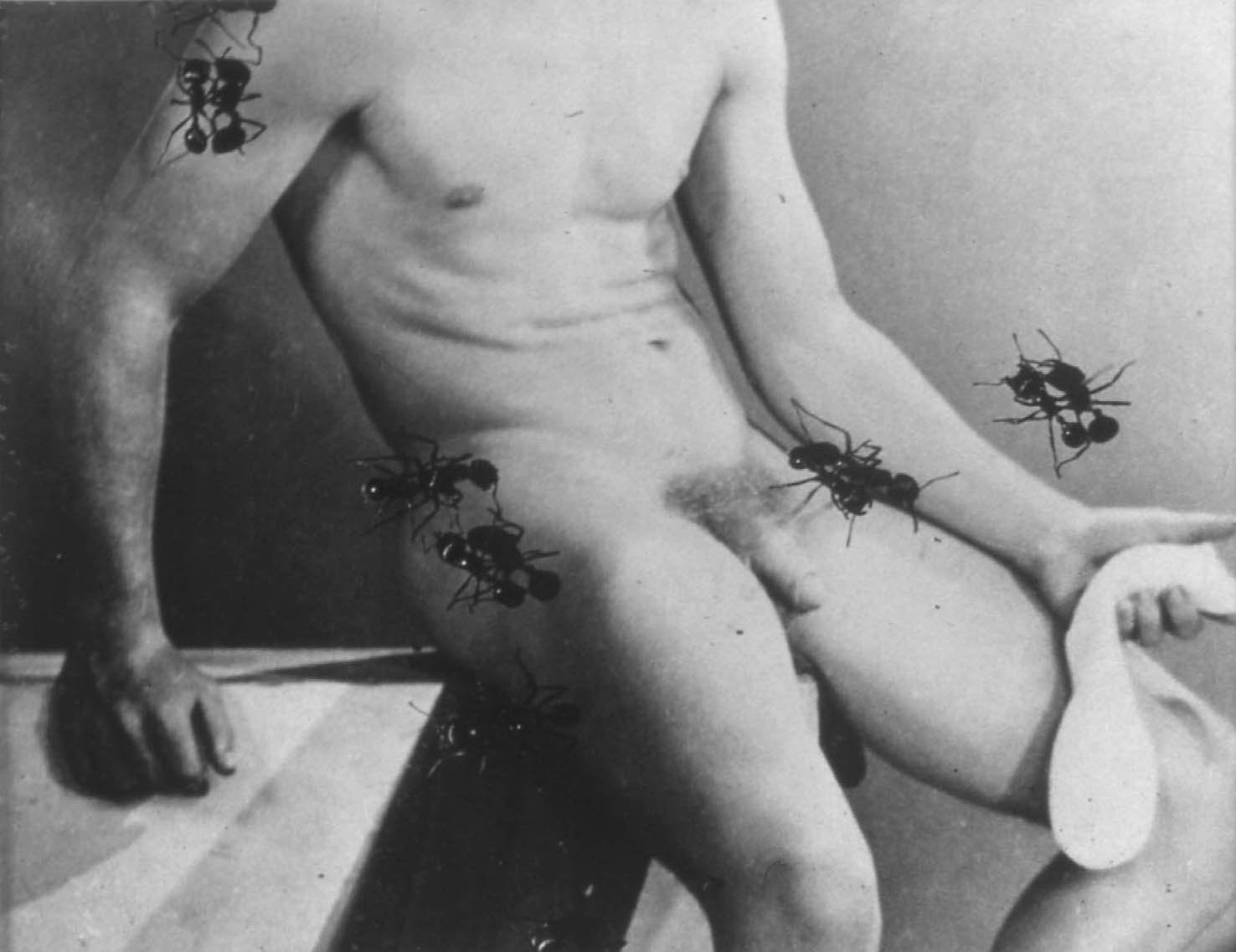
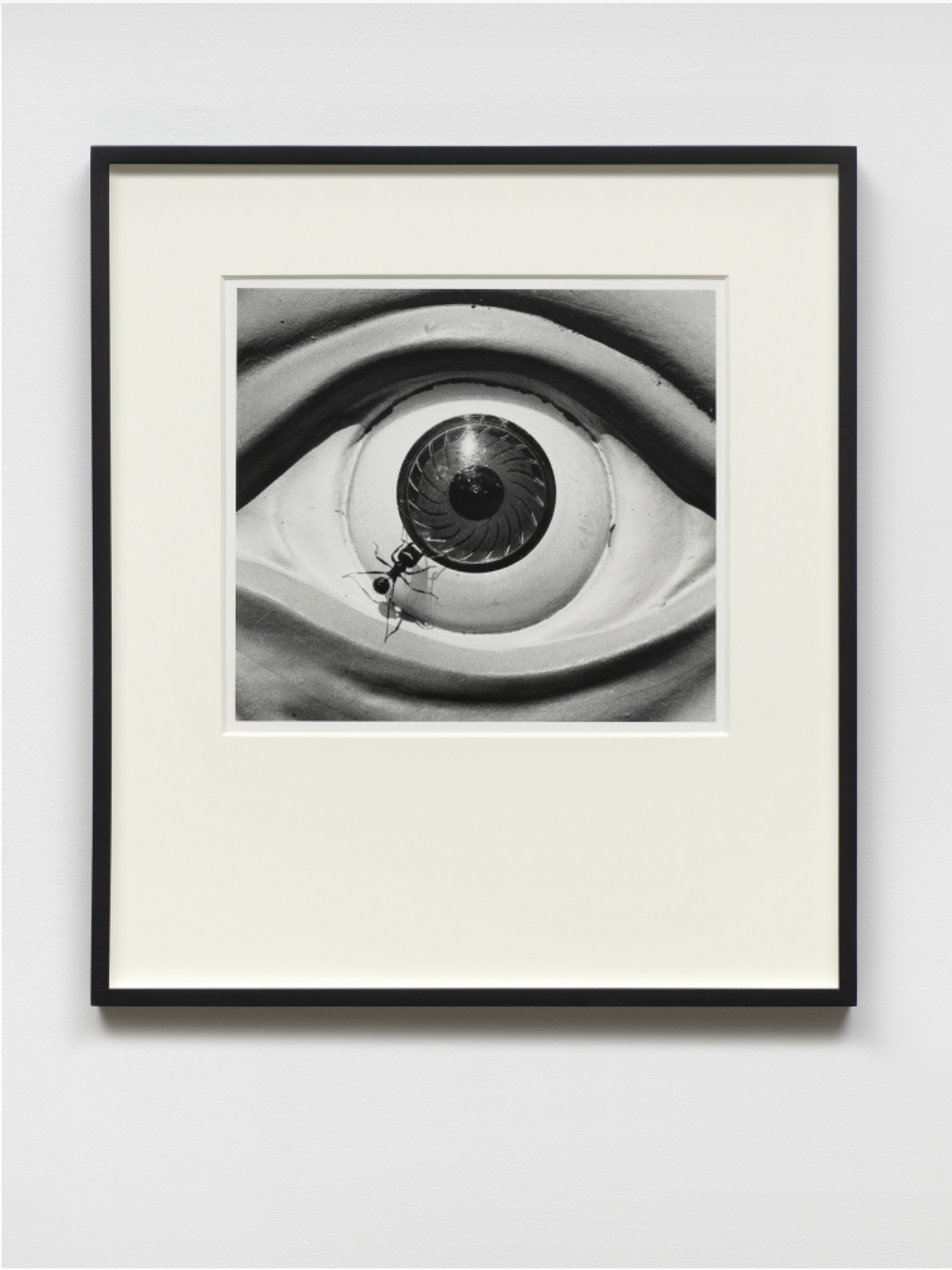
Five years later David turned his focus to another insect species, re-photographing various photographic images covered in plastic ants to create what curator Dan Cameron calls “disturbing portents of mortality and decay” in his “Ant Series,” 1988-1989.
Nothing fascinated [David] so much as searching out and photographing live animals or insects.
While Rizk acknowledges that “with cockroaches, admittedly, [David’s] compassion seems constrained,” she also cites an essay written by David’s long-time partner Tom Rauffenbart that gives a broader perspective on David’s love of the natural world, and how “nothing fascinated [David] so much as searching out and photographing live animals or insects.” Recounting his visit to Mexico with David and their mutual friend Anita Vitale, Tom writes:
“[David’s] respect for life was so strong that he thought nothing of putting us in danger in order to avoid squashing some creature appearing out of nowhere in front of us when we drove. Once in Mexico, he, our friend Anita, and I were on our way to visit the ruins at Coba. On one long stretch of road he insisted that I drive at a snail’s pace so as not to smash into any of the thousands of butterflies swirling through the air around our car. I tried, but no matter how slowly I drove, there were casualties, and as each body hit the windshield he would groan and flinch in sympathy.”
— Sakarit Chankaew (Pratt Institute 2025), David Wojnarowicz Foundation Fellow, Spring 2025
Cameron, Dan, ed. 1998. Fever: The Art of David Wojnarowicz. New York: Rizzoli.
Cynthia Carr, Fire in the Belly: The Life and Times of David Wojnarowicz, 2013. New York, NY: Bloomsbury USA
Rauffenbart, Tom (Harris, Melissa, ed.) 2015. David Wojnarowicz: Brush Fires in the Social Landscape (25th Anniversary Edition). New York: Aperture.
Morgan Library. 2025. “Hujar, Peter.” The Morgan Library & Museum. 2025. Purchased on the Charina Endowment Fund, 2013.
Museum of Modern Art. 2018. “Beast: Animal Imagery in Recent Painting.” The Museum of Modern Art. MoMA. 2018.
New Museum. 2025. “Exhibitions – New Museum Digital Archive.” New Museum Digital Archive. 2025.
Rizk, Mysoon. 2009. “Taking the ‘S’ out of ‘Pest.’” Antennae: The Journal of Nature in Visual Culture Issue 11: 37–50.
Rizk emphasizes that “given his own long-time outlaw status, and especially after awareness of HIV/AIDS, Wojnarowicz would remain preoccupied with illegitimacy, closely associated with being designated abject or diseased,” and points out that David’s “cock-a-bunnies” preceded his work addressing the AIDS crisis, and reflected a lifelong identification with marginality.
Five years later David turned his focus to another insect species, re-photographing various photographic images covered in plastic ants to create what curator Dan Cameron calls “disturbing portents of mortality and decay” in his “Ant Series,” 1988-1989.